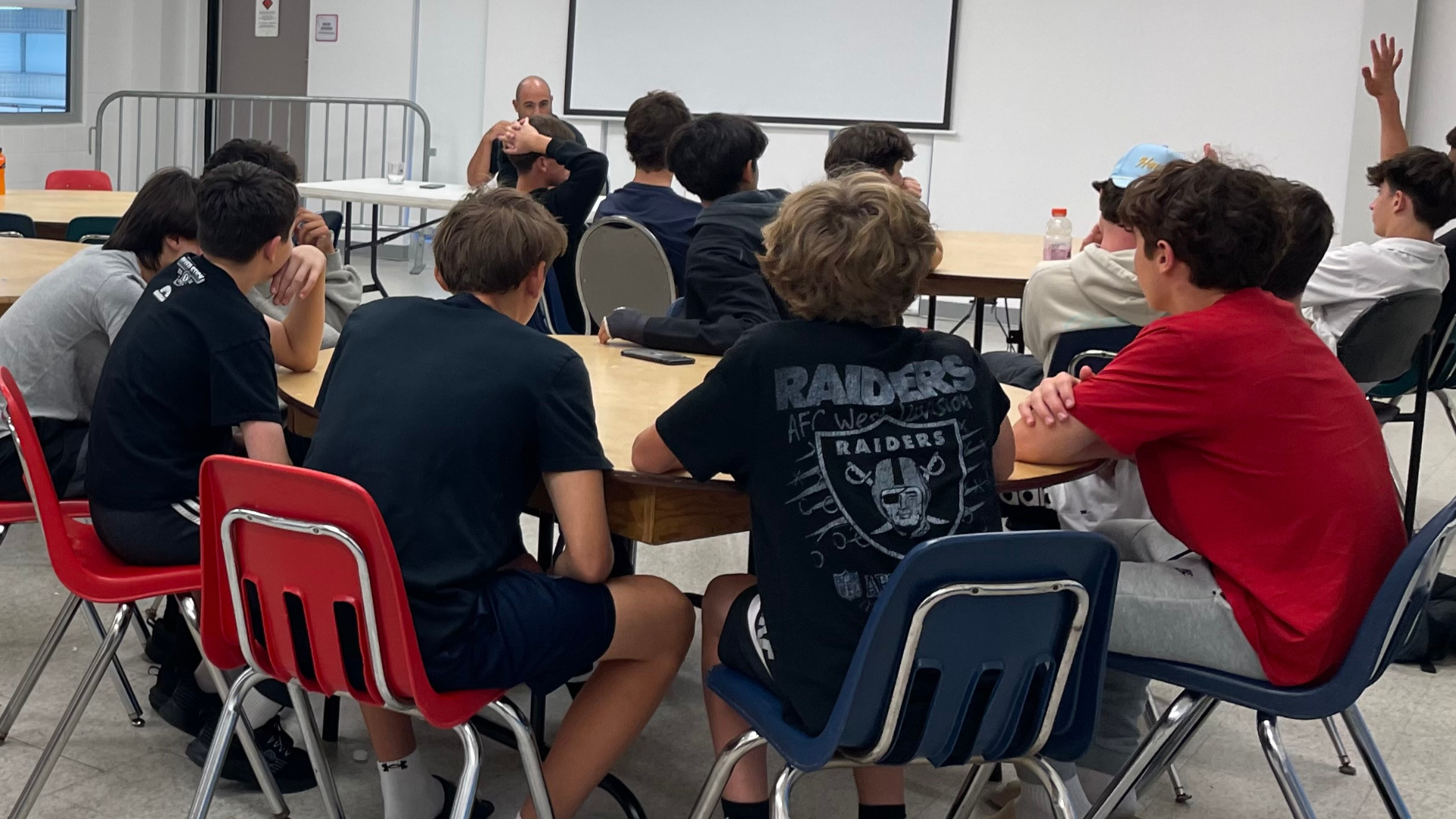
When Mark DeMontis walks into a room full of young hockey players, they’re often expecting another lecture — like the ones they sit through in school. Instead, the players are met with something completely different.
“I don’t like it to feel the kids are being talked at,” the Greater Toronto Hockey League alumnus explained. “I’d much rather feel like I’m hanging out and conversing with a team about important matters.”
That conversational approach is at the heart of DeMontis’ educational sessions on disability and accessibility in hockey — work that has earned him recognition including the GTHL’s John R. Gardner Special Recognition Award and most recently, the NHL’s Willie O’Ree Community Award in 2024.
Rather than delivering information in a classroom-style setting, DeMontis works with teams to explore how disability is woven into the fabric of hockey. He shares his own journey from sighted player to blind hockey pioneer, having spent years working to grow the game for people who are blind and partially sighted in Canada and around the world.
Players are often surprised by the authenticity of the sessions, and DeMontis’ willingness to be forthcoming gives them space to feel comfortable doing the same.
“I’m no different than anyone else there, I’m just sharing my stories,” DeMontis said. “And because I’m sharing my story and opening up to it, the players start sharing their own.”
DeMontis opens up conversations that often reveal how many young players have their own connections to disability — whether it’s a learning challenge, a parent who uses a wheelchair, or struggles with mental health.
“There’s just been a stigma that hockey is not a game for people with disabilities,” he said. “But in reality, there are people with disabilities who play our game each and every day, most of them are just invisible.”
While the sessions help players develop awareness about disability in sports, DeMontis also sees how they teach players key life lessons about relating with others.
“I see players take it upon themselves to want to educate themselves,” he said. “In the same way they look to hone their skills on the ice, I’ve seen them want to sharpen their ability to learn more about people away from the rink.”
For DeMontis, this work is essential. He wants to ensure that young people with disabilities don’t end up on the sidelines.
“We need to ensure that we can create a space for the future where anyone with any form of disability can see themselves in the game as either a player or a fan,” said DeMontis. “People with disabilities and people without disabilities integrated into one community.”
“That’s the true meaning of inclusion.”