Content provided by Holland Bloorview Kids Rehabilitation Hospital.
A concussion is a brain injury that can affect how your brain works. Concussions may happen because of a hit to the head, face, neck, or somewhere else on the body. When a hit takes place, the brain moves back and forth inside the skull. If it moves hard enough, the brain can become injured. This can make your brain and body work and feel different.
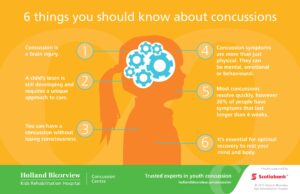
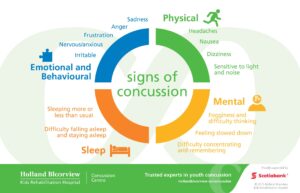
Everyone’s concussion experience is different and not everyone reacts the same way. Signs and symptoms related to concussion can be grouped into four main categories:
- Physical
- Cognitive and Mental
- Emotional/Behavioural
- Sleep
For some, recovery from a concussion is quick, and for others, the road to recovery is longer. It’s hard to predict how long a concussion will last.
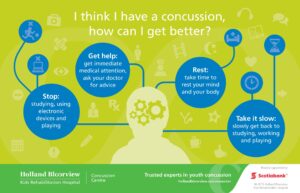
When you’ve had a concussion, it’s important for you to immediately:
- Stop studying, working, or playing
- See your doctor for help
- Rest your brain and body
- Take it slow with your return
You and your doctor or healthcare team member need to work together to help you get better from your concussion. They will help you slowly go back to studying, working, or playing. Keep in mind – to get better you need PHYSICAL and MENTAL rest. Taking steps to conserve energy, get enough sleep, relax, eat the right food, and plan return to school or activities, will help you to conserve energy and manage your concussion.
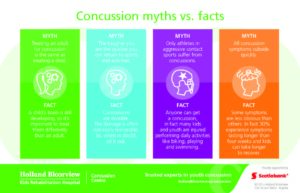
Check out the Concussion Myths versus Facts, provided Holland Bloorview Kids Rehabilitation Hospital:
The concussion recovery timeline is different for everyone.
Everyone’s timeline for concussion recovery is a bit different, but there are some general rules that will help you return to regular life safely. Using the sleep, energy conservation, relaxation, and nutrition strategies from the beginning of your recovery process will provide you with the tools and skills necessary to let your brain recover, and make it easier to begin reintegration into school and then sport.
Holland Bloorview recommends that you successfully return to school without post-concussion symptoms before you move on to returning to sport. This will reduce your chances of re-injury by moving you through the stages of lower risk to higher risk activities in the right order.
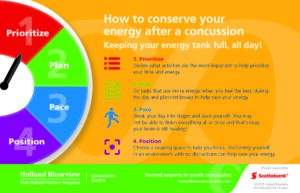
You can conserve your energy by using the “Four P’s”:
- Prioritize
- Plan
- Pace
- Position
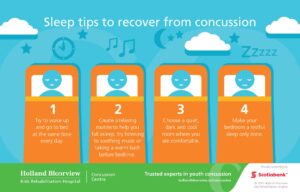
After you’ve had a concussion, getting enough and good quality sleep is one way to help your brain recover so you can return to your daily life and go back to the activities you want or need to participate in.
Coaches Association of Ontario – Rowan’s Law Concussion Toolkit
This Toolkit provides Ontario Coaches with the relevant tools and materials to support the use of consistent concussion protocols across all sport settings. It is aligned with the Canadian Guideline on Concussion in Sport and Rowan’s Law.
Concussion Recognition Tool 5 (Coach.ca)
Holland Bloorview Kids Rehabilitation Hospital – Return to Sport and School Resources
Concussion services at Holland Bloorview Kids Rehabilitation Hospital: