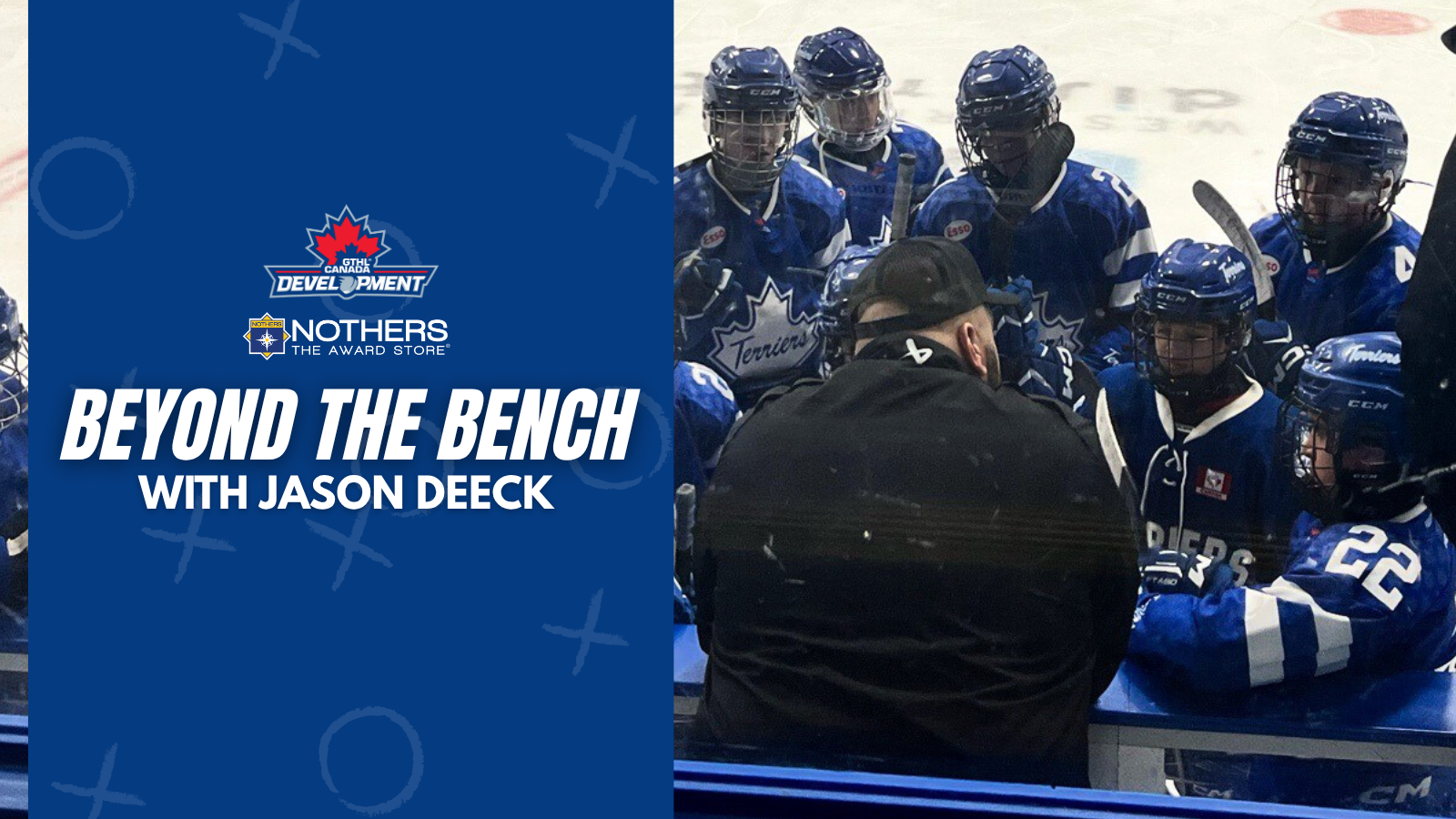
Jason Deeck’s love for hockey is almost genetic. From the moment his father arrived in Canada, the game became a core Deeck family passion.
“I played hockey basically my whole life,” Deeck said. “My dad was a big fan of hockey when he moved here from Lebanon. He led me and my brother into hockey, and we all loved it.”

Deeck continued to play all throughout his childhood — competing for the Cooksville Phantoms and Credit Valley Wolves up until his Under-18 year, before stepping away from the game for a while. A couple of years later, Deeck was looking for a way to get back into the game. He remembered a conversation he had with one of his minor hockey coaches.
“When I played, I had a coach named Mike Mitchell who coached two teams,” Deeck recalled. “I played for the older team so he would push me a lot to help him out with the younger team. Throughout the season he would [tell me I had to be a coach when I was done].”
With Mitchell’s encouragement in mind, Deeck decided to give coaching a try. He started coaching for a younger cousins’ team. After spending a year with the team, he quickly discovered a whole new passion for hockey.
“I really liked it, so I just dove right into doing it full-time,” said Deeck. “And once I started doing it, I just fell in love with it more.”
Deeck’s passion and dedication allowed him to quickly make an impact on his players. Over eight seasons of coaching, he has developed a philosophy centred around the belief that hockey is about more than just winning.
“I’m big on family first. Every locker room I was in was like a brotherhood,” Deeck said. “Hockey can be so focused on developing and moving up and being better than the next person next to you, and that can take away from the game. I focus on team building and team bonding. If you’re a family on and off the ice, the product you put on the ice is going to be better than if you aren’t.”
Deeck’s family first philosophy guides him in the lessons he tries to instill in his players, focusing on collaboration and teamwork.
“Teamwork is the biggest lesson in life,” he said. “Whether it’s in school working on group projects, or working for a company and working with other people… It’s being able to work with others and constantly change who you’re working with.”
While it took some time for Deeck to fully develop his philosophy of teamwork and collaboration, the inspiration was always there, stemming from his own minor hockey coaches.
“Every coach I had, focused so much on team bonding and team building experiences,” Deeck said. “You have to have each other’s backs, no matter what.”
While he has grown a deep passion for coaching, Deeck acknowledges that it comes with its own set of challenges. Early on, he had to learn to manage his emotions and understand the impact emotions had on his players.
“I’m a very emotional person. I wear my emotions on my sleeve,” Deeck said. “It took me a couple years to figure out how to contain the emotions when I have to, and how to let them out when I have to. The kids feed off your energy. And if your energy is negative, they’re going to be negative.”
When asked what the highlight of his eight-year coaching career is so far, Deeck’s answer reveals what he truly values about the game.
“When I coached an ‘A’ team… That team was phenomenal, a great group on and off the ice,” he said. “But the real highlight was September after they aged out. They all went to university, and within the first couple of weeks, I get a FaceTime call, and it’s all of them. They’re going crazy, ‘Coach J, Coach J, Coach J,’ and they got so happy that I answered.”
That moment helped highlight for Deeck the real reason he coaches.
“At that point I realized, you know, I made a difference in their life,” he said. “No matter how small of a difference I made, I made a positive enough impact for them to take five minutes out of their evening to call me.”
For Deeck, coaching isn’t just about developing the next generation of hockey players — it’s about developing the next generation of good people.
“It’s about the relationships and lessons you learn within a sport,” said Deeck. “There’s so much we can teach these kids. That’s a lot more than just what’s on the ice that’s going to help them in their life.”